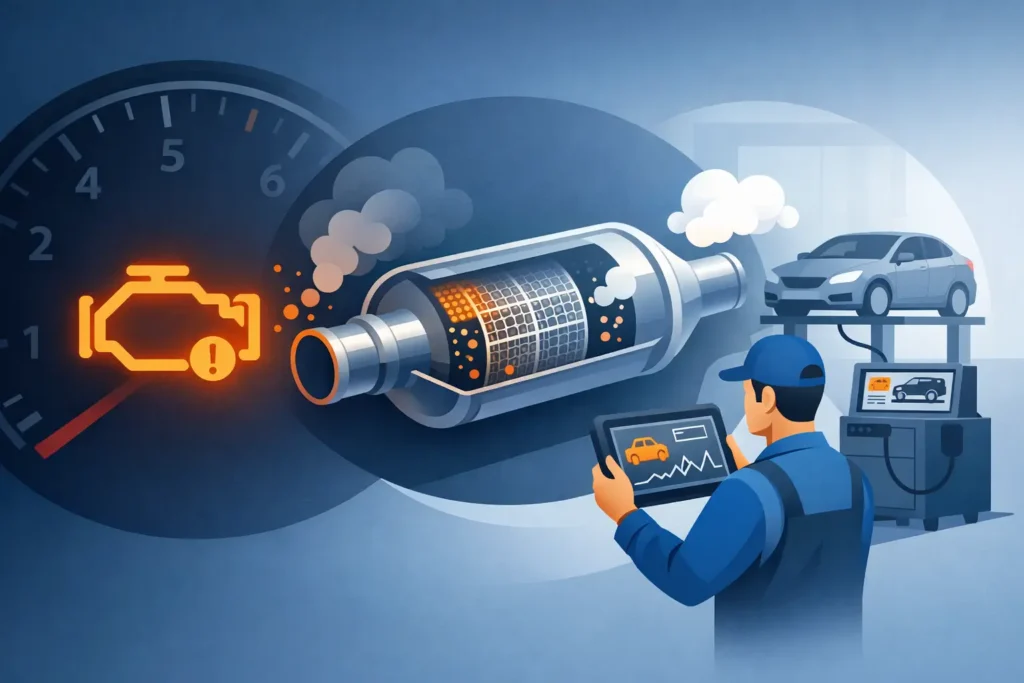
A DPF warning light is not simply a prompt to take the car for a longer drive. A proper DPF warning light diagnostic service establishes why the filter has loaded up, whether the vehicle can regenerate safely and which underlying fault may be preventing it from doing so. Acting early can make the difference between a controlled repair and a costly DPF, sensor or turbo-related issue.
For diesel car owners, van operators and fleets around Southampton and Hampshire, the practical concern is downtime. A van that loses power halfway through a working day, or a diesel car that enters limp mode before a motorway journey, needs evidence-led diagnosis rather than guesswork.
What the DPF warning light is telling you
The diesel particulate filter captures soot produced during normal diesel combustion. When soot accumulation reaches a calculated threshold, the engine management system attempts an active regeneration. It raises exhaust gas temperature so the soot can burn away, usually during a sustained drive when engine load and exhaust temperature are suitable.
The warning light means the ECU believes the DPF soot load is above its normal operating level or that regeneration has not completed as expected. It does not automatically mean the DPF itself has failed. Short journeys can be enough to trigger the issue, particularly on modern diesels used for school runs, local work or stop-start delivery routes.
However, repeated warnings, a flashing light, reduced power or additional engine-management warnings need closer attention. Continuing to drive when the system is unable to regenerate can increase soot loading to a point where a normal road regeneration is no longer appropriate. Excessive soot can also create high exhaust back pressure, affecting performance, fuel economy and potentially components upstream of the filter.
Why a DPF warning light diagnostic service matters
A forced regeneration or a DPF cleaning product may sometimes be part of the solution. Neither should be the first assumption. Regeneration is a process, not a cure for every fault. If a pressure sensor is reporting incorrect values, an EGT sensor is faulty, there is a boost leak, or the engine is producing excessive soot, the warning can return quickly.
Diagnostics first means reading more than a generic fault code. A technician needs to assess live data and compare it with the vehicle’s operating condition. Depending on the vehicle, this may include calculated soot mass, ash loading, differential DPF pressure, exhaust gas temperatures, regeneration status, injector correction values, coolant temperature, boost request versus actual boost and relevant fault-code history.
This approach protects the vehicle. Attempting a regeneration on an unsuitable vehicle can be ineffective at best and risky at worst. If the DPF is heavily restricted, if there are unresolved sensor faults or if engine oil has been diluted by repeated failed regeneration attempts, the right next step may be repair, cleaning or further mechanical investigation instead.
Soot loading and ash loading are different
Soot is the carbon material that the vehicle can normally burn off during regeneration. Ash is non-combustible residue, largely created over time from oil additives and normal engine wear. Regeneration does not remove ash.
That distinction matters on higher-mileage vehicles. A DPF may show a manageable soot load but still have a high ash value or excessive pressure drop, restricting exhaust flow. Conversely, a low-mileage vehicle with a sudden warning may have a sensor, thermostat, driving-pattern or combustion-related issue rather than a filter that has reached the end of its service life.
Common causes behind a DPF warning light
Short, low-speed journeys are common, but they are not the only cause. A diesel needs to reach and maintain the right temperatures before a regeneration can complete. A weak thermostat that prevents the engine reaching normal operating temperature can therefore be just as relevant as city driving.
Faulty differential-pressure sensors and split or blocked pressure pipes can make the ECU calculate an incorrect DPF load. Exhaust gas temperature sensors are equally important because the ECU uses them to manage regeneration safely. A failed sensor may inhibit regeneration even where the filter is physically capable of clearing.
Engine condition also matters. Worn injectors, air leaks, a sticking EGR valve, boost-control faults or a contaminated air filter can increase soot production. On some vehicles, an oil service is required after repeated unsuccessful regenerations because diesel fuel can contaminate the engine oil. Ignoring this can compromise lubrication and create a much more expensive problem than the original warning light.
For working vans, payload, route pattern and idling time are part of the diagnostic picture. A vehicle making short multi-drop journeys may need a different maintenance strategy from one regularly travelling between Southampton, Portsmouth and the wider motorway network.
What a professional DPF assessment should involve
A useful diagnostic appointment starts with the vehicle’s symptoms and recent use. Has the warning appeared once or repeatedly? Has fuel consumption changed? Is there reduced power, a fan running after switch-off, a high idle speed or a strong diesel smell? These details help establish whether regeneration has been attempted and whether it is completing.
The electronic assessment should then identify stored, pending and historic fault codes, rather than clearing them immediately. Live data is checked with the engine at operating temperature where safe and appropriate. DPF differential pressure is assessed at idle and raised engine speed, while relevant sensor readings are checked for values that do not make engineering sense.
A road test may be appropriate where the vehicle is safe, insured and able to be driven without risk. This can reveal whether requested boost, airflow, temperature and pressure values track correctly under load. The result is a clearer decision: complete a normal regeneration drive, resolve a supporting fault, arrange professional DPF cleaning, investigate engine condition, or in some cases replace a filter that is beyond practical recovery.
At Boostcore, mobile diagnostics are designed around that decision-making process. Dealer-level equipment and vehicle-specific live-data checks allow the service to take place at your home, workplace or another suitable agreed location, subject to the work required and safe access to the vehicle.
When you should stop relying on a motorway run
A steady run can help only when the vehicle has no critical fault preventing regeneration and the soot level remains within a safe range. If the warning has just appeared, there are no other faults and the car is driving normally, the manufacturer guidance for your vehicle may recommend a sustained run at suitable road speed. The handbook should always take priority.
Do not rely on this approach if the light is flashing, the vehicle has entered limp mode, there is noticeable smoke, the engine-management light is on, the oil level has risen or the warning returns after previous regeneration attempts. These are signs that diagnosis is needed before further driving or any commanded regeneration.
The same applies to additive bottles and generic code clearing. They can delay the correct repair and erase information that helps identify the cause. A warning light that disappears without the root cause being resolved is not necessarily a successful fix.
DPF faults and ECU software: responsible boundaries
ECU calibration and vehicle diagnostics are related, but they are not interchangeable. A healthy vehicle with a functioning emissions system should be the starting point for any remap. Tuning a vehicle with an active DPF fault, excessive back pressure or unresolved fuelling issue is poor engineering and can increase risk to the engine and exhaust system.
A diagnostic assessment can also confirm whether the ECU software status, fault-code strategy or previous work on the vehicle needs consideration. Any repair-focused work should retain the vehicle’s required emissions equipment and comply with applicable roadworthiness, insurance and legal requirements. Removing or disabling emissions-control equipment for road use is not a responsible answer to a DPF warning.
For fleet operators, documented diagnostics are particularly useful. They support repair approval, help identify repeat route-related issues and reduce the temptation to replace expensive parts without evidence.
The practical next step
Book a diagnostic assessment while the vehicle is still driveable and before the warning becomes a limp-mode recovery. Bring the vehicle’s recent service history, explain how it is used and avoid clearing codes beforehand. The most useful outcome is not merely having the light switched off – it is knowing whether the DPF can regenerate, what stopped it and what needs attention to keep it working properly.